Lean In Review

16071764.jpg

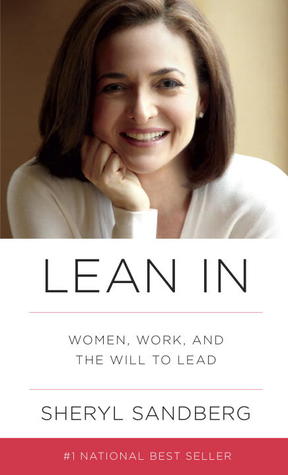
A good bordering on great book, underrated as a result of overly contentious discussions about Sandberg’s privilege. This is true even given her recent comments after her husband’s death. I wonder how many critics actually read the book. The book is clearly meant for a particular audience, but isn’t everything?

Take this section from the introduction, for example.

Some, especially other women in business, have cautioned me about speaking out publicly on these issues. When I have spoken out anyway, several of my comments have upset people of both genders. I know some believe that by focusing on what women can change themselves — pressing them to lean in — it seems like I am letting our institutions off the hook. Or even worse, they accuse me of blaming the victim. Far from blaming the victim, I believe that female leaders are key to the solution. Some critics will also point out that it is much easier for me to lean in, since my financial resources allow me to afford any help I need. My intention is to offer advice that would have been useful to me long before I had heard of Google or Facebook and that will resonate with women in a broad range of circumstances…

I am also acutely aware that the vast majority of women are struggling to make ends meet and take care of their families. Parts of this book will be most relevant to women fortunate enough to have choices about how much and when and where to work; other parts apply to situations that women face in every workplace, within every community, and in every home. If we can succeed in adding more female voices at the highest levels, we will expand opportunities and extend fairer treatment to all.

Overall there was a lot of clear thinking for both men and women in the workplace and interesting data. I especially like the detailed sections on the challenges of childbirth and childcare, on being more assertive in the workplace, and on learning not to be too hard on one’s self.

Durant to the Warriors

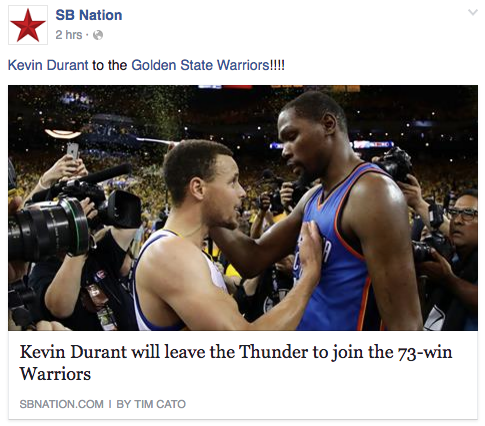
In breaking news (that I myself did not break) Kevin Durant has signed with the Golden State Warriors.

Thoughts

1. Haters gonna hate.
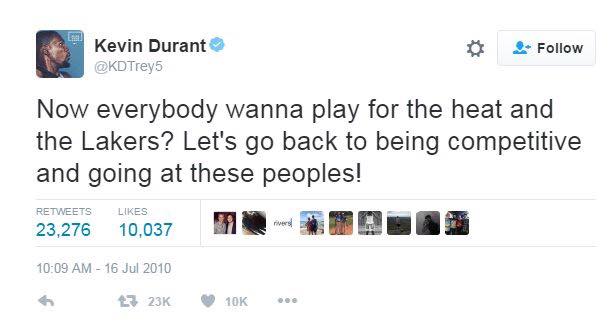
The haters have already come out en mass calling Durant a traitor, saying that his exit is worse than The Decision (LeBron James’s announcement that he was leaving Cleveland to go to the Miami Heat). I always find this point of view strange. Try applying the logic to anything else in life and it sounds absurd: You graduate college. You don’t get to choose where you get a job, instead you are “drafted” by Microsoft. You try diligently for nine years to overtake Apple. You fail. Your teammates are great, but an even better team awaits at Facebook that has an even better chance of overtaking Apple as the world’s top technology company. You decide to leave. Who will call you a traitor?

On the other hand there is this:

13606469_10105278370854398_2005399536903163743_n.jpg

2. Sports matter.
The thought experiment above is just a reframing of the idea that sports really matter to people. Their brains turn off, tribal affiliation and emotions kick in. I always find it silly when non-sports fans deride enthusiasm toward sport and suggest we devote that energy to “something that matters.” Sports matter. As much as anything in our society sports matter. To millions (billions?) of people around the world a fan’s home team is a part of their identity and rooting for another team is as unimaginable as adopting another family. In a very real sense their home team and their home team’s fans are a part of their family.

Screen Shot 2016-07-04 at 11.02.09 AM.png Screen Shot 2016-07-04 at 11.00.59 AM.png

3. The best ever.
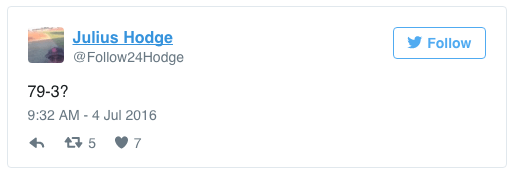
The Warriors’ starting lineup is now considered the best ever. Last year — without Durant — they won 73 games, the most in NBA history! More than teams that included Michael Jordan, Magic Johnson, LeBron James. Durant is the second best player of his generation behind LeBron and one of the best players of all time. Steph Curry is the best player of his generation. The Warriors already had arguably the two best 3-point shooters of all time in Curry and Thompson. Now they have three of the top — what? Maybe 10 or 20 — shooters of all time! Draymond Green is one of the best all around players in the league, perhaps of all time by the time he retires (he finished second in NBA Defensive Player of the Year Award voting in 2016 and second in triple doubles). Three of the Warriors’ new starting five received regular season MVP votes last year. Between Durant and Curry they’ve won the past three regular season MVPs. Iguodala came in second for the NBA’s Sixth Man Award this year (and won the Finals MVP a year ago). Has any team like that ever been assembled?  The Warriors’ 12-man lineup includes many solid roll players so even if you replace Iguodala with Bogut or Livingston you still create the greatest lineup ever (Update: Bogut will likely be traded to clear up cap space for Durant).

Screen Shot 2016-07-04 at 10.50.01 AM.png

4. But remember…
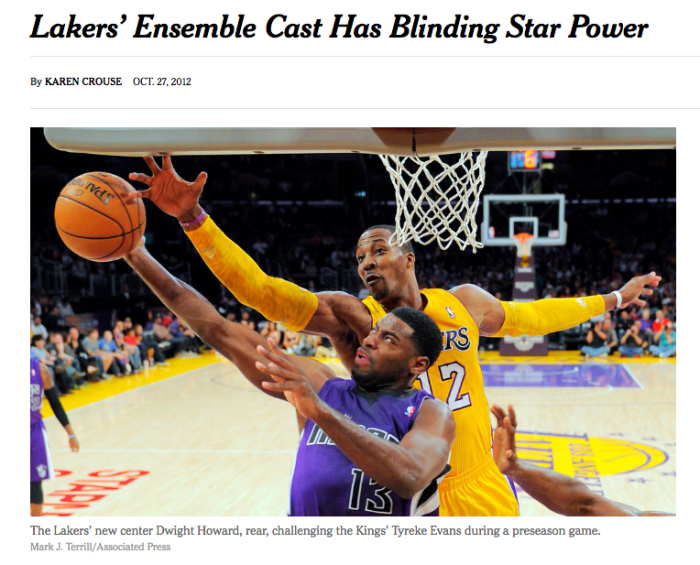
The Championship was handed to the Miami Heat after LeBron, Wade, and Bosh joined forces in 2010. That team went 2-2 in the Finals. An accomplishment to be sure, but it’s not like we could just pencil them in as champions every year. Remember when Howard and Nash joined the Lakers? They became a favorite to get to the finals; they didn’t even make the playoffs. Let’s not speak too soon about the success of these new Warriors.

Screen Shot 2016-07-04 at 10.45.27 AM.png

5. Russell Westbrook must be PISSED.
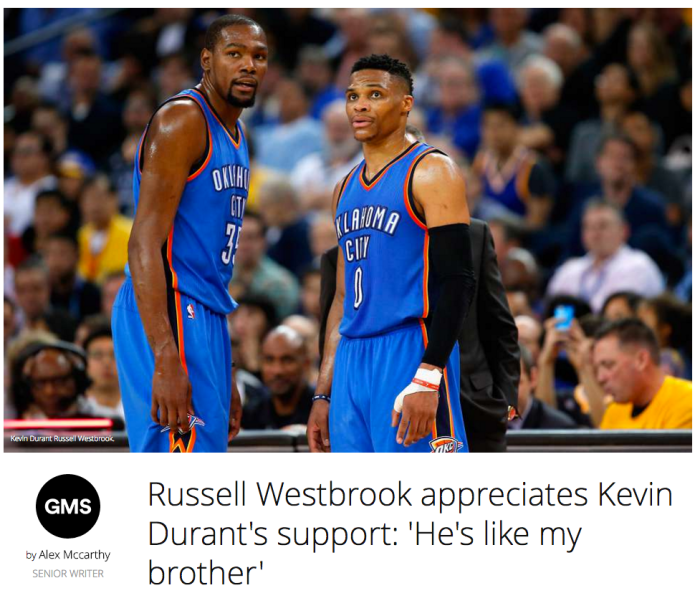
Steph Curry is one of Westbrook’s most hated foes and now Durant — the man that once called Westbrook a brother — has left to play with that foe. Ouch!

Screen Shot 2016-07-04 at 10.41.59 AM.png

Testing Tony Kornheiser’s Football (Soccer) Population Theory

Fans of the daily ESPN show Pardon the Interruption (PTI) will be familiar with the co-host’s frequent “Population Theory.” The theory has a few formulations; it is sometimes asserted that when two countries compete in international football the country with the larger population will win, while at other times it’s stated that the more populous country should win.

The “Population Theory” sometimes also incorporates the resources of the country. So, for example, Kornheiser recently stated that the United States should be performing better in international football both because the country has a large population, but also because it has spent a large sum of money on its football infrastructure.

I decided to test this theory by creating a dataset that combines football scores from SoccerLotto.com with population and per capita GDP data from various sources. Because of the SoccerLott.com formatting the page wasn’t easily scraped by R or copied and pasted into Excel, so a fair amount of manual work was involved. Here’s a picture of me doing that manual work to breakup this text 🙂

IMG_4265

The dataset included 537 international football games that took place between 30 June 2015 and 27 June 2016. The most recent game in the dataset was the shocking Iceland upset over England. The population and per capita GDP data used whatever source was available. Because official government statistics are not collected annually the exact year differs. I’ve uploaded the data into a public Dropbox folder here. Feel free to use it. R code is provided below.

Per capita GDP is perhaps the most readily available proxy for national football resources, though admittedly it’s imperfect. Football is immensely popular globally and so many poor countries may spend disproportionately large sums on developing their football programs. A more useful statistic might be average age of first football participation, but as of yet I don’t have access to this type of data.

Results

So how does Kornheiser’s theory hold up to the data? Well, Kornheiser is right…but just barely. Over the past year the more populous country has won 51.6% of the time. So if you have to guess the outcome of an international football match and all you’re given is the population of the two countries involved then you should indeed bet on the more populous country.

Of the 537 games, 81 occurred on a neutral field. More populous countries fared poorly on neutral fields, winning only 43.2% of the time. While at home the more populous country won 53.1% of their matches.

Richer countries fared even worse, losing more than half their games (53.8%). Both at home and at neutral fields they also fared poorly (winning only 45.8% and 48.1% of their matches respectively).

The best predictor of international football matches (at least in the data I had available) was whether the team was playing at home: home teams won 60.1% of the time.

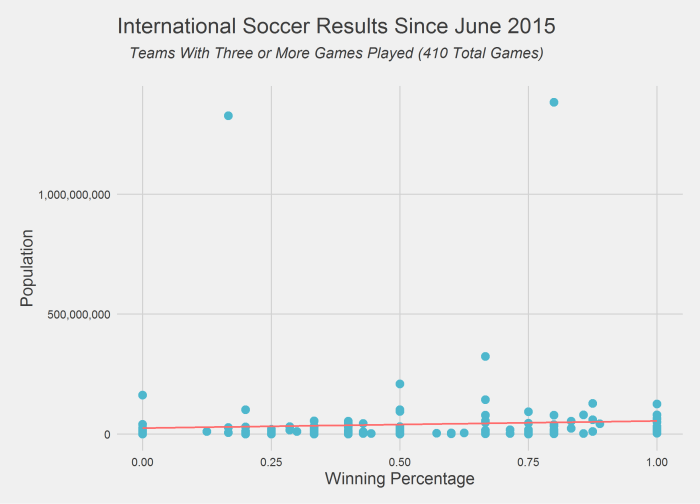
To look more closely at population and winning I plotted teams that had played more than three international matches in the past year against their population. There were 410 total games that met this criteria. I also plotted a linear trend line in red, which as the figures above suggest, slopes upward ever so slightly.

population_vs_winning_perct.png

Although 527 games is a lot, it’s only a single year’s worth of data. It may be possible that this year was an anomaly and I’m working on collecting a larger set of data. As the chart above suggests many countries have a population around 100 million or less and so it would perhaps be surprising if countries with a few million more or fewer people had significantly different outcomes in their matches. But we can test this too…

When two countries whose population difference is less than 1 million play against one another the more populous country actually losses 55.9% of the time. When two countries are separated by less than 5 million people the more populous country wins slightly more than random chance with a winning percentage of 52.1%. But large population differences (greater than 50 million inhabitants) does not translate into more victories. They win just 51.2% of the time. So perhaps surprisingly the small sample of data I have suggests that population differences matter more when the differences are smaller (of course this could be spurious).

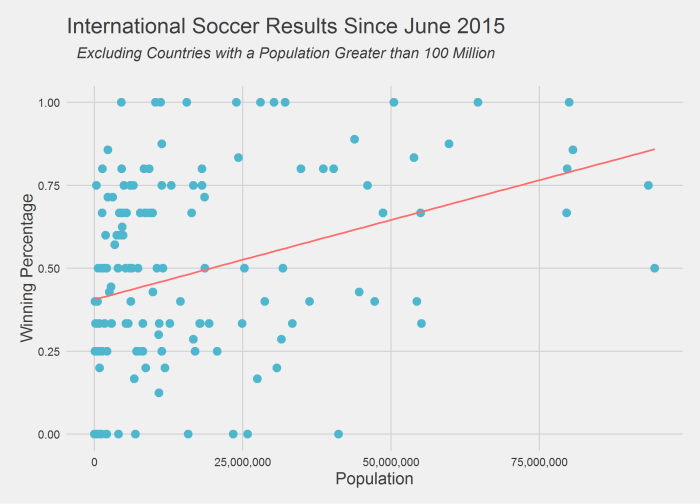
This can be further seen below in a slightly different view of the chart above that exchanges the axes and limits teams to those countries with less than 100 million people.

population_vs_winning_perct_smaller.png

R code provided below:

###################################################################################################
# James McCammon
# International Football and Population Analysis
# 7/1/2016
# Version 1.0
###################################################################################################
 
# Import Data
setwd("~/Soccer Data")
soccer_data = read.csv('soccer_data.csv', header=TRUE, stringsAsFactors=FALSE)
population_data = read.csv('population.csv', header=TRUE, stringsAsFactors=FALSE)
 
 
################################################################################################
# Calculate summary data
################################################################################################
# Subset home field and neutral field games
nuetral_field = subset(soccer_data, Neutral=='Yes')
home_field = subset(soccer_data, Neutral=='No')
 
# Calculate % that larger country won
(sum(soccer_data[['Bigger.Country.Won']])/nrow(soccer_data)) * 100
# What about at neutral field?
(sum(nuetral_field[['Bigger.Country.Won']])/nrow(nuetral_field)) * 100
# What about at a home field?
(sum(home_field[['Bigger.Country.Won']])/nrow(home_field)) * 100
 
# Calculate % that richer country won
(sum(soccer_data[['Richer.Country.Won']])/nrow(soccer_data)) * 100
# What about at neutral field?
(sum(nuetral_field[['Richer.Country.Won']])/nrow(nuetral_field)) * 100
# What about at a home field?
(sum(home_field[['Richer.Country.Won']])/nrow(home_field)) * 100
 
# Calculate home field advantage
home_field_winner = subset(home_field, !is.na(Winner))
(sum(home_field_winner[['Home.Team']] == home_field_winner[['Winner']])/nrow(home_field_winner)) * 100
 
# Calculate % that larger country won when pop diff is less than 1 million
ulatra_small_pop_diff_mathes = subset(soccer_data, abs(Home.Team.Population - Away.Team.Population) < 1000000)
(sum(ulatra_small_pop_diff_mathes[['Bigger.Country.Won']])/nrow(ulatra_small_pop_diff_mathes)) * 100
#Calculate % that larger country won when pop diff is less than 5 million
small_pop_diff_mathes = subset(soccer_data, abs(Home.Team.Population - Away.Team.Population) < 5000000)
(sum(small_pop_diff_mathes[['Bigger.Country.Won']])/nrow(small_pop_diff_mathes)) * 100
#Calculate % that larger country won when pop diff is larger than 50 million
big_pop_diff_mathes = subset(soccer_data, abs(Home.Team.Population - Away.Team.Population) > 50000000)
(sum(big_pop_diff_mathes[['Bigger.Country.Won']])/nrow(big_pop_diff_mathes)) * 100
 
 
################################################################################################
# Chart winning percentage vs. population
################################################################################################
library(dplyr)
library(reshape2)
 
base_data = 
  soccer_data %>%
  filter(!is.na(Winner)) %>%
  select(Home.Team, Away.Team, Winner) %>%
  melt(id.vars = c('Winner'), value.name='Team')
 
games_played = 
  base_data %>%
  group_by(Team) %>%
  summarize(Games.Played = n())
 
games_won = 
  base_data %>%
  mutate(Result = ifelse(Team == Winner,1,0)) %>%
  group_by(Team) %>%
  summarise(Games.Won = sum(Result))
 
team_results = 
  merge(games_won, games_played, by='Team') %>%
  filter(Games.Played > 2) %>%
  mutate(Win.Perct = Games.Won/Games.Played)
 
team_results = merge(team_results, population_data, by='Team')
 
# Plot all countries
library(ggplot2)
library(ggthemes)
ggplot(team_results, aes(x=Win.Perct, y=Population)) +
  geom_point(size=3, color='#4EB7CD') +
  geom_smooth(method='lm', se=FALSE, color='#FF6B6B', size=.75, alpha=.7) +
  theme_fivethirtyeight() +
  theme(axis.title=element_text(size=14)) +
  scale_y_continuous(labels = scales::comma) +
  xlab('Winning Percentage') +
  ylab('Population') +
  ggtitle(expression(atop('International Soccer Results Since June 2015', 
                     atop(italic('Teams With Three or More Games Played (410 Total Games)'), ""))))
ggsave('population_vs_winning_perct.png')
 
# Plot countries smaller than 100 million
ggplot(subset(team_results,Population<100000000), aes(y=Win.Perct, x=Population)) +
  geom_point(size=3, color='#4EB7CD') +
  geom_smooth(method='lm', se=FALSE, color='#FF6B6B', size=.75, alpha=.7) +
  theme_fivethirtyeight() +
  theme(axis.title=element_text(size=14)) +
  scale_x_continuous(labels = scales::comma) +
  ylab('Winning Percentage') +
  xlab('Population') +
  ggtitle(expression(atop('International Soccer Results Since June 2015', 
                          atop(italic('Excluding Countries with a Population Greater than 100 Million'), ""))))
ggsave('population_vs_winning_perct_smaller.png')

Created by Pretty R at inside-R.org

Customer Journey Management and the O-ring Theory

I was recently directed to this 2013 HBR article on managing customer journeys written by Alex Rawson, Ewan Duncan, and Conor Jones.

The article included this line:

Take new-customer onboarding, a journey that typically spans about three months and involves six or so phone calls, a home visit from a technician, and numerous web and mail exchanges. Each interaction with this provider had a high likelihood of going well. But in key customer segments, average satisfaction fell almost 40% over the course of the journey.

…which instantly broad to mind the O-ring theory of economic development. Wikipedia summarizes the theory like this: “[the O-ring theory] proposes that tasks of production must be executed proficiently together in order for any of them to be of high value.”

One fallout of the theory is that, because independent probabilities multiply, “doing a good job” often isn’t good enough. Take the example of the TV provider excerpted above. After a comprehensive customer journey analysis was conducted it was discovered that on average there were 19 separate customer interactions. Now suppose there is a 95% satisfaction rate for each interaction when considered alone. The probability that all 19 interactions will be successful for any given customer is only 37% (.95^19). Meaning the majority of customers will have at least one negative experience.

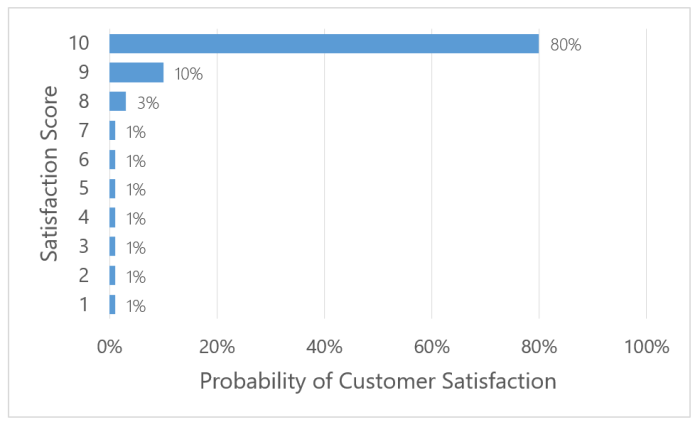
To think about the impact of cross-touchpoint experience management more fully I ran a simulation in R. I imagined there was a company that had 10,000 customers they were onboarding over the course of a year with 19 various touchpoints. To make the simulation more realistic I shifted from the binary “satisfied/unsatisfied” calculation above and imagined the satisfaction score distribution for each touchpoint show below. For most companies this would be a highly successful customer management program. And indeed, after running 1,000 simulations the average customer score is a 9.4 (which is just the expected value using the distribution below).

…but because there are so many customers and the probabilities of each touchpoint are independent 5.5% of customers ended up having two or more touchpoints they rated as a two or below. Nearly a quarter (24.5%) of customers had two or more touchpoints that were rated a five or below.

probs.PNG

This could have drastic consequences for revenue. Two or more horrible touchpoint experiences during the onboarding process — which is obviously the first impression a customer has with a particular company — could lead customers to reduce the amount of service they buy or to abandonment altogether.

One way to think about fixing the problem of the customer journey is to envision transforming independent probabilities into conditional probabilities. So, for example, if a customer does experience a particularly bad touchpoint the conditional probability that their subsequent touchpoints will be managed with special diligence should increase.

From an O-ring point of view the answer is simple: ensure that you are creating agglomeration economies that attract high-performing individuals that help construct great teams. Groups of people that are operating together at a high-level inspire one another and hold one another accountable, creating a virtuous circle. Over time the natural effect is to weed out low performers. Great teams might reduce the probability of a poor experience from 5% to 0.5%.

Of course to perform at their maximum level teams need to be well trained and know what mark to shoot for. This is just the solution the authors helped the TV provider narrow in on.

The authors conclude that:

As company leaders dug further, they uncovered the root of the problem. Most customers weren’t fed up with any one phone call, field visit, or other interaction—in fact, they didn’t much care about those singular touchpoints. What reduced satisfaction was something few companies manage—cumulative experiences across multiple touchpoints and in multiple channels over time.

The pay TV company’s salespeople, for example, were focused on closing new sales and helping the customer choose from a dense menu of technology and programming options—but they had very little visibility into what happened after they hung up the phone, other than whether or not the customer went through with the installation. Confusion about promotions and questions about the installation process, hardware options, and channel lineups often caused dissatisfaction later in the process and drove queries to the call centers, but sales agents seldom got the feedback that could have helped them adjust their initial approach.

The solution to broken service-delivery chains isn’t to replace touchpoint management. Functional groups have important expertise, and touchpoints will continue to be invaluable sources of insight, particularly in the fast-changing digital arena. (See David Edelman’s“Branding in the Digital Age: You’re Spending Your Money in All the Wrong Places,” HBR December 2010.) Instead, companies need to embed customer journeys into their operating models in four ways: They must identify the journeys in which they need to excel, understand how they are currently performing in each, build cross-functional processes to redesign and support those journeys, and institute cultural change and continuous improvement to sustain the initiatives at scale.


R code below:

###################################################################################################
# James McCammon
# Customer Experience Simulation
# 6/25/2016
# Version 1.0
###################################################################################################
 
# Function to get the number of customers with a certain number of ratings below a given threashold
percent_x_scores_below_y = function(sim, num_scores, equal_or_below_cutoff, num_customers) {
  (sum(apply(sim,2,FUN=function(x) sum(x<=equal_or_below_cutoff)) >= num_scores)/num_customers) * 100 
}
 
# Set variables
scale = 1:10
probs = c(.01, .01, .01, .01, .01, .01, .01, .03, .1, .8)
interactions.per.customer = 19
num_customers = 10000
n = interactions.per.customer*num_customers
num_sims = 1000
 
# Setup results matrix
sim_results = matrix(nrow=num_sims, ncol = 3)
colnames(sim_results) = c('Average_Customer_Rating',
                       'Percent_Having_Two_Scores_Below_Two',
                       'Percent_Having_Two_Scores_Below_Five')
 
# Run simulation
for(i in 1: num_sims) {
  # Run sim
  sim = matrix(sample(scale, size=n, replace=TRUE, prob=probs), ncol=num_customers, nrow=interactions.per.customer)
  # Store mean score
  sim_results[i,'Average_Customer_Rating'] = mean(apply(sim,2,mean))
  # Store % of customers with two scores below 2
  sim_results[i,'Percent_Having_Two_Scores_Below_Two'] = percent_x_scores_below_y(sim, num_scores=2, equal_or_below_cutoff=2, num_customers)
  # Store % of customers with two scores below 5
  sim_results[i,'Percent_Having_Two_Scores_Below_Five'] = percent_x_scores_below_y(sim, num_scores=2, equal_or_below_cutoff=5, num_customers)  
}
 
# Calculate average across sims
apply(sim_results, 2, mean)

Created by Pretty R at inside-R.org

Poor Design Choice by Apple

Why is the “Add to Dictionary” option so close to the actual spell check corrections? So many times my hand slips, goes a little too far, and adds a misspelled word to the computer’s dictionary. Cmd + Z does not seem to undo this misstep. And the internet tells me it is quite hard to go in and change the computer’s dictionary to correct the mistake. What’s worse is that after the word is added to the dictionary the red underline indicating a mistype disappears so that you don’t know if you corrected the word or accidentally added it to the dictionary. I then have to copy and paste the word into Google to determine which of the two cases occurred since Google has a quite robust spell check feature.

Screen Shot 2016-06-11 at 11.00.54 AM.png

What is the Best Characteristic for Business Leaders?

There are many candidates, but perhaps something like: “Strongly stated weak priors” (priors are a Bayesian statistics concept that roughly translates to: “How strongly do you believe what you believe based on prior evidence?”). Leaders must be flexible enough to quickly change their mind in the face of contradictory information or the emergence of a better plan from colleagues, but must sound confident so that subordinates will feel motivated to undertake the given direction and not too often challenge the leader. A leader that has weakly stated weak priors will too often induce endless vacillation. But making a wrong decision and gaining momentum is often a better alternative than making no decision at all or to making a series of quick direction changes whenever a new piece of information emerges. As Gary Vaynerchuk said just yesterday on his Snapchat channel, it’s better to make a wrong decision and then adapt to it than to make a slow decision. A leader with strong priors will too often ignore contradictory evidence and lead the business down a wrong path without the flexibility to adapt.

Or perhaps an even better candidate for a characteristic is “Strongly stated weak priors wrapped around a core of genuinely strongly held beliefs.” As I stated in my last post many of the most famous business leaders in recent memory likely held as their most worthwhile talent shaping the world to their vision whether or not that vision had any real merit to begin with. But during the long road to bringing their vision to light they had to both lead and follow the recommendations of their lieutenants (as long as the lieutenants views didn’t contradict one of their strongly held beliefs.”)

My Answer to Peter Thiel’s Question

Here is my answer to Peter Thiel’s now famous appeal to entrepreneurs to “tell me something that’s true that almost nobody agrees with.” Although it’s not explicitly stated in the question if you read Peter’s work it’s probably better if the assertion is forward-looking.

My Answer:
Most people think the future of business is about big data, but the future of business is about simply heuristics.

Why:
The answer is simple. At the highest level business has always been about simple heuristics. If you read any of the biographies about prominent business leaders of the past, say, 30 years – Jobs, Gates, Bezos, Musk – what stands out is that they follow their intuition. Often the intuition goes against all prevailing signals and their real talent is not seeing the future, but rather stubbornly creating it, often at great personal, and sometimes professional, expense.

The rule of heuristics often holds true for entrepreneurs as this quote below from the New Yorker’s profile of Mark Andreessen demonstrates (notice that both the old and new model of startup funding use heuristics):

When a startup is just an idea and a few employees, it looks for seed-round funding. When it has a product that early adopters like—or when it’s run through its seed-round money—it tries to raise an A round. Once the product catches on, it’s time for a B round, and on the rounds go. Most V.C.s contemplating an investment in one of these early rounds consider the same factors. “The bottom seventy per cent of V.C.s just go down a checklist,” Jordan Cooper, a New York entrepreneur and V.C., said. “Monthly recurring revenue? Founder with experience? Good sales pipeline? X per cent of month-over-month growth?” V.C.s also pattern-match. If the kids are into Snapchat, fund things like it: Yik Yak, Streetchat, ooVoo. Or, at a slightly deeper level, if two dropouts from Stanford’s computer-science Ph.D. program created Google, fund more Stanford C.S.P. dropouts, because they blend superior capacity with monetizable dissatisfaction.

Venture capitalists with a knack for the 1,000x know that true innovations don’t follow a pattern. The future is always stranger than we expect: mobile phones and the Internet, not flying cars. Doug Leone, one of the leaders of Sequoia Capital, by consensus Silicon Valley’s top firm, said, “The biggest outcomes come when you break your previous mental model. The black-swan events of the past forty years—the PC, the router, the Internet, the iPhone—nobody had theses around those. So what’s useful to us is having Dumbo ears.”* A great V.C. keeps his ears pricked for a disturbing story with the elements of a fairy tale. This tale begins in another age (which happens to be the future), and features a lowborn hero who knows a secret from his hardscrabble experience. The hero encounters royalty (the V.C.s) who test him, and he harnesses magic (technology) to prevail. The tale ends in heaping treasure chests for all, borne home on the unicorn’s back.

This doesn’t mean big data won’t have an impact on business, but that it’s not the future of business. When to fund big data projects and the collection of the massive amounts of data necessary to feed them, when to replace or augment existing business systems with big data systems, when big data is overkill and unnecessary, when data needs an injection of personal intuition, when business questions are formatted in a way that’s difficult for computer’s to understand, and many other questions hinge on the decisions of business leaders, which will inevitably are made using simple heuristics. Output from big data is just one more source of information that will be leveraged by business decision makers using simple heuristics.

You may get the impression that I’ve made the argument that almost no one believes that big data is the future of business. But alas any amount of magazine, blog, or newspaper reading, or even a large portion of listening to business leaders, will show you that my view is decidedly in the minority. Business leaders are using simple heuristics in their approach to big data even if they do not always realize it.

Things I Do and Don’t Hear (in Seattle)

In the category of “signs of mood affiliation” here is a short list of things I do and don’t hear in Seattle:

Do hear: “Who funded that study showing GMOs were safe?”
Don’t hear: “Who funded that study showing GMOs weren’t safe?”

Do hear: “We should be believe in climate change because nearly every major scientific organization (and many individual studies) have shown it’s real and a serious problem.”
Don’t hear: “We should believe in the efficacy of GMOs because nearly every major scientific organization (and many individual studies) have shown both their safety and benefits.”

Do hear: “Are you aware of the methodological and measurement problems of GDP?”
Don’t hear: “Are you aware of the methodological and measurement problems of the inequality data?”
Don’t hear: GDP isn’t perfect, but it correlates with nearly everything else we do care about and so as a single measure it’s not bad.

Do hear: “That scathing op-ed in the New York Times by the ex-Wall Street executive really hit the nail on the head.”
Don’t hear: “That scathing op-ed in the New York Times by the ex-Wall Street executive was an ‘n’ of 1. Hundreds of thousands of people work on Wall Street, surely some of them find the work challenging and rewarding.”
Do hear: “That interview with the Iraqi teenager who supported America’s invasion was an ‘n’ of 1. Surely, there are many other contrary opinions among Iraqis.”

Do hear: “You can’t trust the corporate billionaire’s position on tax reform, she’s totally biased!”
Don’t hear:
“You can’t trust the social justice activist who’s entire identity is wrapped up in opposing corporations writ large, she’s totally biased.”

Do hear: “We need to learn from and honor the traditional practices of the Tanzanian farmer.”
Don’t hear: “We need to learn from and honor the scientific techniques of the modern American farmer.”

Do hear: “Justice Antonin Scalia was a horrible person. His interpretation of the law is crazy. He’s allowing corporations to take over elections because he subscribes to corporate personhood.”
Don’t hear: “I’ve actually read Citizen’s United or any other judicial opinion/concurrence/dissent from Scalia.”
Also hear: “Why are you even quoting the bible if you haven’t read the whole thing cover to cover? Why don’t you read something before forming an opinion.”

Do hear: “Justice Antonin Scalia was a horrible person. His interpretation of the law is crazy. He’s allowing corporations to take over elections because he subscribes to corporate personhood.”
Rarely hear: “I have any knowledge at all of the law or legal history.”
Don’t hear: “I’m aware that most of the econometric work on elections shows that spending has little effect on election outcomes and since the Citizen’s United decision campaign spending has actually gone down.”

Do hear: “Supreme court justices on the right are obviously biased about gay marriage and should recuse themselves.”
Don’t hear: “Ruth Bader Ginsburg presided over a same-sex wedding and should recuse herself in gay marriage cases.”

Will probably hear: The person that wrote this post is obviously a republican and pro corporation/Monsanto/a bunch of other stuff and anti same-sex marriage/equality/a bunch of other stuff.
Will probably not hear: The person that wrote this post has views that do not comport with either political party, but as he lives in Seattle he tends to hear more liberal hypocrisy than conservative hypocrisy, of which there is undoubtedly mounds.

How long until we view M2F sexual reassignment surgery like we do breast implants?

This question arises because I am currently in London and for the first time noticed several women on OKCupid that had listed their gender as transsexual. This follows a pattern of more transsexuals being open about their gender reassignment in other dating apps I use.

I say that one day gender reassignment will be viewed more or less like breast implants are today. How long? My guess is two to three generations at most (about 50 years or so).

So what are the similarities?

Surgery
Of course, both involve body modification surgery.

Authenticity
Both types of body modification face criticisms of inauthenticity. We ask women if “they’re real” as if having breast implants is illegitimate. The discrimination trans women face today is much worse, but I anticipate in the future comments will slowly move in the same direction so that the main criticisms of trans women will revolve around their “fakeness” rather than the harsh and detesting discrimination they currently face.

Ambiguity
Of course, it is often not so easy to tell if a woman has had breast implants, especially when she has clothes on. More and more the story is the same with transgender women. I actually dated a woman for a several months recently and to this day do not know if she had breast implants (I know that sounds ridiculous, but it’s true; there were signs in opposing directions). Many, many times on dating apps I see a woman and I cannot tell if she is trans or just happens to have masculine features or has a preference for a particular type of makeup application. Sometimes I cannot tell at all and only know from her openness about it on her profile. I’ve been on a date with a woman that was particularly tall with a deep voice and a less curvy figure; but she also had many feminine features. I still have no idea whether she was trans.

Femininity
Both M2F sexual reassignment and breast implants are a move toward femininity, which is to say both procedures move in the same direction. Neither procedure may conform to everyone’s view of femininity, but it is at least the view of those undergoing the procedure.

Kids
In a discussion about the comparison to breast implants a friend pointed out that one difference is that transsexual women will never be able to bear children. I think eventually science will overcome this problem, transplanting more sexual organs into gender reassignment recipients, but I admit this is likely more than 50 years off (perhaps the first experimental procedures of this nature will take place in 50 years). But from a practical point of view I think men are less intent on having their own children than women, and so “settling” for adoption isn’t so bad.

So while breast implants and gender reassignment differ in that the former doesn’t affect the ability to reproduce, on the whole I view them both as compromises one may have to make: “Well, I’m not that into breast implants, but I love you so let’s be together” vs. “Well, I would have liked to have biological children, but I love you so we can adopt.” And note that of course many relationships today survive various female infertility problems with what I suspect is not to much heartache on the side of the man.

Taste
Breast implants are not for everyone. Some men don’t like the way they look or feel. Some fraction of men prefer breast implants for the same reasons. In 50 years dating a transsexual woman will be viewed the same way. A few men will have a trans fetish, as they do now, and some won’t be able to get over the aesthetic aspects. But on the whole most men will be willing to compromise and trans discrimination will be limited to whispers that “someone’s had some work done” rather than prohibition on North Carolina bathroom usage. This is not to say subtle forms of discrimination are not hurtful, but again that transsexual discrimination in 50 years will be equivalent to the whispers and judgement those with breast implants get today.

And by the way, note that many women today may or may not have masculine attributes such as sharp facial features or prominent facial hair (ex. eyebrows) and men are correspondingly attracted, or not, according to their taste. Because (especially non-Asian) trans women tend to have more masculine features men will or will not be attracted to them on the same grounds they are or are not attracted to more masculine women today.

Sex
You may be tempted to point out that the anatomical changes necessary for breast implants are far less than those necessary for gender reassignment and so people’s views about having sex with a tans woman, even in 50 years, will be different than our views about having sex with females that have had breast augmentation today.

I think many people over estimate the anatomical differences however, and they are only likely to diminish over time as surgical techniques improve. If anything, the fact that transsexual vaginas are sculpted from “scratch” may mean that men will find them more pleasurable. To this point, a trans female acquaintance once told me “trans pussy is the best pussy” (and no I’m not making that up).

And note that STDs are still an issue. Trans women have high rates of STDs. In this way the early trans movement is similar to the emergence of gay culture in the 1980s.

Not Caring
Most men probably don’t care too much one way or another whether their partner has breast implants. It may not be their preference, but for most men breast implants aren’t a deal breaker. In 50 years dating a transsexual will be viewed the same way. Rather than be a deal breaker for most men, as the situation stands today, my grandchildren (or perhaps their children) will mostly not care. The important thing will be whether they love their partner, they’ll have to make certain compromises — as we all do — to find an ideal mate and their partner’s previous gender will be one such minor compromise that may arise.

I suspect that the younger the person when they underwent surgery the easier it will be to accept a partner’s new gender. Dating someone that had reassignment surgery at 18 somehow seems easier to stomach than dating someone that had the same surgery at 40. In some ways I simply view this as the fact that we find people with their shit together more attractive and so the sooner someone “finds themself” and has gender reassignment surgery the better. We all know someone in their mid-40’s starting their 4th career and wonder what’s going on. The other component, of course, is that for whatever reason the longer someone has lived with their current gender the more legitimate it seems.

Representation
Some women are quite open about their breast implants. Others do not open up about it immediately. Some get what you might call “breast implants as a badge,” what look to me to be ridiculous and audacious implants that announce to the world what is living inside their breasts. In 50 years transsexual women will behave the same way.

In fact, various stages of openness are already starting to occur. I have met a transsexual woman who feels it is not her responsibility to inform her partner because she no longer self-identifies as a women. Many other women on dating apps like Tinder and OKCupid change their profile gender to “trans” or announce in their profile something along the lines of “I’m a post-op transsexual women. If that bothers you please keep your comments to yourself and move along.” Some trans women seem to intentionally project themselves to make it obvious they have had gender reassignment surgery.

Identity
There is a question as to whether there is a greater sense of identity wrapped up in gender reassignment. Gender is part of identity to be sure, but I’m not convinced it is drastically more important to our identity than our occupation; national, state, city, or neighborhood affiliation; physical appearance; or political ideology. For a particular type of person “political reassignment surgery” is just as drastic a change as gender reassignment surgery. More broadly, for many Americans “reassignment” away from being “a Boston cop” or “a religious Texas rancher” is no less drastic or unthinkable than M2F reassignment. This is all to say I think there is a similar sense of identity involved in both sorts of surgery where body modification is an attempt to transform one’s physical appearance to comport with the way in which one imagines themselves, and that gender transformation is not necessarily anymore intertwined with identity than many other aspects of ourselves.