A Stochastic, Interrogative Approach to Medium-Sized Project Execution

Oh hush, the title is just for fun.

I am happy to write this post as it crystallizes the approach I take to problem solving; an approach that until recently I had trouble expressing. To bring the approach into clearer relief we can take a hypothetical project example: updating a product support website.

Their Approach

The standard approach is to first assign a team to the project: a project manager, someone in charge of strategy, a client-facing manager, designers and UX reviewers, perhaps a data analyst and maybe a web engineer.

Next a framework of some kind is applied. Perhaps there are five phases, most of them sequential, each depending on the completion of some prior step. The phases in turn have many sub-steps to be completed. Team assignments are made as to who will do what. The project manager is certain to require status checks and keep track of logged hours.

The phased approach is sure to contain a structured research component, the creation of personas, a stage involving a careful UX audit, long discussions with the client about KPIs and getting really specific about their needs. An initial presentation of the phases will be made as well as follow-on presentations about how each of the sub-processes are progressing.

The approach aims to present a carefully crafted final product by moving slowly one step at a time in progression. The project phases, structure, and path are more or less laid out from the beginning. This is the approach everyone seems to take. It is taught in business schools. Questions are asked about it in interviews (“Tell me the approach you would take to solve this problem. What steps are needed?”). It is often encouraged by the client (because, after all, many of them went to business school). But it is a process I deplore. To say it does not come naturally to me is like saying flying does not come naturally to a fish.

My Approach

Instead of aiming to minimize errors by completing the project once carefully, I aim to minimize errors by completing the project quickly multiple times. Each time I learn from my mistakes and find out what is missing, gradually inducing structure as I continue to iterate. The word “stochastic” in the title wasn’t purely a flourish, it describes where I begin: anywhere I like; nor is the term “interrogative,” which describes in my process the act of putting on “the client hat” after each iteration and integrating myself about what is missing from the final output.

So how does it work?

The first step is to reduce the project down to the lowest number of dimensions, its essence. For the project above the assignment might be to “make the support site better and give me some wire frames.” And for my process that’s all the direction I need. What “better” means in practice isn’t so important at this stage, it will become apparent over time. Nor is a defined scope of work necessary, which I personally care little about. The scope becomes whatever I determine it to be as I iterate.

Next I pick a random place to start research. This might be to start looking at competitor sites, it might be reading about UX best practices, it might be examining academic articles in a business journal. Again, the starting point is stochastic. I simply start at whatever entry point seems exciting and relevant. I do some research for a while and if I don’t find anything or get tired of research I quit and start a new research thread. I take mental notes, begin inducing an organizational structure for the data I find and final client recommendations, and start thinking about what a wireframe might look like. I take screenshots and write down notes.

Then after some amount of research, whatever feels right (but in the case above probably a few days), I start to create a wireframe. I produce it as if I’m giving it to the client. As I create it my mind is filled with questions. Is addition X of the wireframe really needed? Why did I add it in the first place? What quantitative piece of data would support adding it? Can I get that data myself or does the client have that data? What if the data turns out to oppose my intuition? This begins the stage of interrogation as I aim to create a first draft product that withstands client review. As I play the role of the client I interrogate the output (the wireframe in this case). Can I truthfully say I did all the research I could in area Y to justify the removal of something currently on the support site? What are some of the themes that various aspects of the research fall under that would unify my approach? What KPIs would making these changes really drive? Do my changes work for all users or just a subset?

As my self-interrogation begins to make my output crumple and I begin to take notes about where it needs to be shored up, how I can shore it up, where I need to do more research, different conclusions I would draw depending on what various data look like, and so on. I have a list of things to tackle. What do I do? I start over. I pick a random item on the list that excites me. I again research, this time in more depth or in areas I know I’ve missed. I take new notes. A new picture is formed in my head. It’s not completely new, but rather a more robust and complete version. I remake the wireframe and re-interrogate myself. I continue the process until I have an answer for every question I can think of, until I pass my self-interrogation. Along the way I will have induced everything I need about how to structure the various aspects of the final deliverable and recommendations.

The Good and the Bad

My process is iconoclastic because I’m naturally a contrarian. I despise standard processes and opinions for no other reason than they are standard. I think it’s better to be interesting than right in almost all cases.

The process I just described did not arise from intention. It’s just the path I take naturally. My mind cannot wrap its head around what needs to be done a priori or how to do it without jumping in with two feet. Nor am I necessarily convinced I’m doing something new. The process I use is somewhat akin to rapid prototyping and has analogies to stochastic computer science optimization algorithms.

In a lot of ways I admire and am jealous of those that can clearly see the path set out before them and create the structured, phased, carefully crafted plan. But that’s not me. I used to want to imitate them, but I’m not sure I ever can. Perhaps it’s better to carve out a small space for myself using my off-beat approach.

My approach has some drawbacks of course. First, it takes a certain personality type (like mine) that combines intelligence, creativity, and impatience. To the outsider it seems as though I’ve skipped something, played fast and loose in an environment that demands caution and foresight.

Second, it’s almost impossible to use this process in a team setting. It creates a small space for a sole endeavor, which is why it doesn’t scale well. Medium-sized projects of the type I described are about as big as you can go (though often large tasks have small components which can utilize this process).

It can also be inefficient. Having to induce a new framework every time you start a project is perhaps not the most efficient way of doing things. Nor is stopping midway through a research thread and starting a new one simply because you were bored. There are very real switching costs to stopping your current task and starting a new one, only to later have to reorient yourself to the old task once interrogation is complete and you remember there are holes in your original research. And yes, you can miss things.

Because it has its own type of inefficiency my process benefits from soft deadlines. The process has no clear completion date, it’s done when you pass the self-interrogation and that can sometimes take longer than desired, so ultimatums like “Get this done by June 3rd” create artificial cycles and derail the process’s freedom.

Because it is less structured it can be hard to give status during the phase in-between draft outputs. Project managers are sure to hate it. In the standard approach we must all be comfortable all of the time, at the first sign of discomfort or ambiguity the project manager swoops in. We have to find out who is doing what, when they will be done, what resources they need, what the dependencies are, a list of next steps, ad infinitum.

But my process also has its benefits.

Just as surely as it is inefficient in certain respects, it is very efficient in others. It allows a single individual to do the work of many. In fact, it demands it. It takes a single individual with diverse thoughts crashing together in their head for the process to be truly effective.

As much as it seems unfocused from the outside, it is hyper-focused from the inside. It does everything at once — the UX audit, the data research, the competitive analysis. And as the one executing it, my mind is always on. I can work harder and longer than most people because the diversity of the approach allows me to stay fresh and hungry. I quickly begin to see the various strands of research combining in my mind and forming a unified story. I begin to see structure and patterns, which in turn combine with whatever new (or old) ideas I’ve encountered in podcasts, books, journal articles, interviews, movies, and conversations with friends; the approach has strong returns to analogy and rewards the combination of disparate thoughts and disciplines.

I’m bounded by no constraints and so can think more creatively and quickly than the alternative, structured path. The phrase “make the support site better and give me some wire frames” is enough direction because the process will figure out the details as it moves along. In this way it’s better at handling ambiguity.

My approach also better abides by Sister Corita Kent’s advice: “Do not try to create and analyze at the same time. They are different process.” The alternative approach fails in this respect because its goal is to simultaneously analyze the problem and create a path toward solution with predefined guardrails long before true creation has ever begun.

Because I don’t have to worry about process, I save up-front planning time. Because I work alone I save time on meetings and coordination. I get to a first draft product quickly, but one that is already coherent and rich with ideas; some of them are wild and may get culled out in later revisions. I can share these early versions with the client, and they are pleased with my progress. I can archive the wild ideas I’ve culled and present them coherently at the end of the project under the heading “Thinking Radically.” I go down dead-end research paths, yes; but so does the alternative approach. I get to fail quickly many times; the alternative approach can hardly afford to fail at all. And because I don’t start out with a pre-defined structure I induce only what I feel is essential rather than letting standard, business school-style frameworks dictate my path and thinking.

Just One Last Thing

Many will still view my process illegitimate, the ex-post justification of a hyperactive manic. I disagree, of course. They say that writing is thinking and I think articulating the process clearly here will only sharpen my skills at it.

The next step is to try to integrate my way of doing things into the standard business practices of my current employer. I will report back.
Thoughts on Equal Pay Day

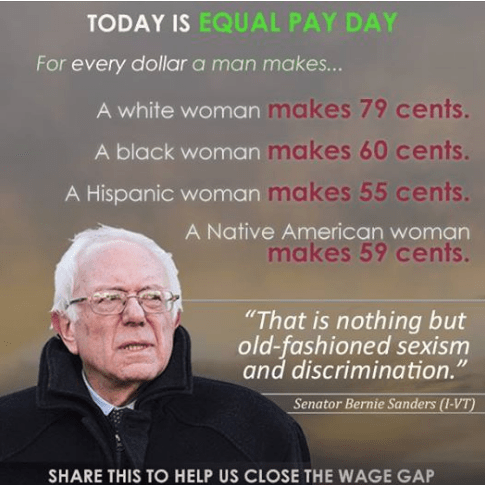
A friend posted this on Facebook and one of her friends wondered about the figures.

Screen Shot 2016-05-03 at 6.40.43 PM.png

I replied with this lengthy comment (edited to provide clarity), which is not meant to be controversial, but may induce controversy:

These are the gross numbers if you just take averages across populations. All of the econometric work I’ve seen suggests that if you adjust for race, education, work experience, and IQ the gap narrows to somewhere between 90 and 96 cents (this econometric work is conducted by both women and men.). That’s good new right? The gap is less than we traditionally believe and that means progress is greater than we traditionally believe, even if there is work left to be done. But when I see this pointed out in various articles, such as a Slate article I read a few months back, the response is, “there’s still a gap.” Well, yes the measured gap still exists (and for the sake of argument let’s assume things are measured correctly), but income differences are still substantially better than you thought. Can’t we celebrate progress and acknowledge ongoing challenges simultaneously? For whatever reason it seems the conversation has gotten so bad (vitriolic? woman-hating? epistemically biased?) that celebrating progress is seen by women as a threat that progress will cease rather than acknowledgment that strides are being made.

In some fields, especially medical fields, men are paid less than women even on average. Probably because women are better people than men, or at least have a reputation for being more empathetic, which lends itself to certain professions. (Some economists have suggested that women will be the beneficiaries of the coming automation revolution as people skills will become ever more scarce and valuable).

You might be tempted to say that men are genetically better positioned for “traditional” white collar jobs because of their aggressiveness and competitiveness, but at least some of this difference is socialized; when researchers have played competitiveness games in matriarchal societies women have scored significantly higher than the men. There is perhaps no easy solution to this problem. It’s unclear that women should be socialized for competitiveness simply so they can be better at traditional white collar employment, which emerged largely at the hands of white men. On the other hand, making the workplace less competitive — even if it is normatively the “correct” approach — is a difficult task. It seems to me competitive and cutthroat environments can be good for productivity and innovation even if they aren’t for everyone (man or woman).

Of course the perfect test of discrimination would be to compare the same people randomizing their sex, unfortunately (fortunately?) that isn’t possible. However, there have been studies where researchers have sent out the same resume with traditionally male and female names and men are more likely to receive an interview. Perhaps surprisingly this holds when women are the hiring manager so the discrimination is not always so easy to identify. The same penalty occurs with traditionally black names on resumes. To me this is much stronger evidence of discrimination than gross differences in pay.

The big thing that hurts women is childbirth. Women have a hard time fighting back and income gaps seem to persist for long after the children are born. And you can imagine that at least as traditional household matters break down, women that are the same age as their male counterparts tend to have less work experience after the age of, say 30 or 35, because they spend more time taking care of children. I would like to see the income argument shift from these raw numbers which I think oversimplify the problem and aren’t so useful at any rate, and toward more targeted discussion of specific policies related to helping women better “withstand” childbirth and its ongoing responsibilities career wise. Of course maternity leave gets talked about a lot, but we probably need to have a deeper, more robust conversation policy wise (and culturally) about how to help. A first step might be helping men to understand the tremendous monetary burden women endure when taking care of children. It is not simply that they forgo income for a year or two when the child is young and they stay home. On average that lost income never comes back. If childbirth accounts for 80% (or whatever) of the true income gap after sensible adjustments to education, experience, and aptitude, it seems a good place to start a policy and cultural conversation rather than pointing to a misleading figure about income differences; the latter is less actionable.

There are also probably other areas where gaps can be narrowed beginning even earlier, such as during education. Roland Fryer has done interesting work here. Even simple things like priming minority students before tests with encouraging words can help them perform better so there is possibly at least some low hanging fruit as grades often translate into opportunities later on. Of course there is lots of work in early childhood education. Differences in education, especially between whites and low-income minorities, certainly play some part in income differences later in life so closing the education gap could be beneficial.

At any rate I don’t think it’s correct to say that the current state of gendered income disparity is “old-fashioned sexism.” It may be new-fashioned sexism, but that probably requires a different conversation and response.

How Much Storage Capacity is in a Speck of Dust?

…apparently enough to hold the entire Library of Congress.

Scientists have created a computer memory system that uses individual atoms to store 0s and 1s. The new storage mechanism is 2-3 hundred times denser than even the densest storage technology used today.

Their memory holds 8128 bits, or a kilobyte, and measures just 96 nanometres by 126 nanometres…

The memory is made of chlorine atoms on a copper surface that is dented with pits, called vacancies. A scanning tunnelling microscope (STM) picks up individual atoms and moves them into or out of the vacancies. The presence or absence of an atom in each pit represents either a 1 or 0.

There is discussion about how the technology could scale, which is where the idea of storing the Library of Congress in a dust speck comes from. In principle I understand how the technology works in two dimensions, but to be truly dense it would need to be some sort of cube configuration and I don’t quite understand how the technology would work 3D. Any physicists out there have an idea?

Google Interview Question 4

In this series I will be attempting to answer current and retried Google interview questions. As outlined in the books How Google Works and Work Rules! Google has found that “boring,” non-riddle questions are best at predicting future performance, but some of the older questions I’ll be answering are riddles.

Question:

“Explain a database in three sentences to your 8-year-old nephew.”

Possible Answers:

(1) That’s my niece (awkward).

(2) The files are IN the computer.

(3) “Listen pal my nephew isn’t the one being interviewed here. He’s only 8, let’s wait until he’s 11 before we get him a full-time gig.”

(4) I would just show him this diagram. Isn’t it obvious what’s going on?

databasepic.png

(5) Imagine we write down all of the titles of your favorite Disney movies on one sheet of paper, all of the different characters in the movies on another sheet of paper, and all of the different adventures the characters have on a third sheet of paper. That way if you ever decide you want to watch a movie about your characters going on a road trip we’ll already know all of the movies with that kind of adventure and we can just go over to the bookshelf and grab all of those movies. So the movies are the database and the sheets of paper are the special way we decided to organize the movies.

The Best Based-on-a-True-Story Movie Idea Ever

For nine months in 2011 the prime minister of Somalia was a New York State Department of Transportation worker living in Buffalo, NY with no political experience who hadn’t been to Somalia in over 20 years. Read the story here. Here is a little taste:

Less than two months ago, he was prime minister of Somalia. He battled terrorists, pirates and warlords. He addressed dignitaries from the United Nations.

Now, Mohamed A. Mohamed is back at his old job at the state Department of Transportation downtown, back to his little cubicle with a window overlooking Swan Street.

A few photos of him as premier were tacked to his wall by colleagues, the only visible reminder that these last nine months weren’t a dream.

“It’s a different feeling when you’re heading a whole nation and you come back to your normal life,” Mohamed said. “It’s a little awkward, to tell you the truth.”

Mohamed was as stunned as anyone when he was offered the prime minister’s position last October, after a trip to the U.N. in New York City to speak with Somalia’s president, Sheikh Sharif Sheikh Ahmed.

Why isn’t this a movie yet? I’ll write the first scene for you:

We open on Mohamed at the NY DOT. He’s just gotten back from his prime ministership in Somalia. Sitting back in his old cubicle he looks uncomfortable. A few people walk by and quickly welcome him back. He forces a smile. The sounds of the office overwhelms him. He turns his chair a quater-turn and starts to day dream. Slowly the sounds of the office fade as we zoom in to his face.

Jump Cut to a busy street in NY City. Mohamaed is making his way across, dodging traffic. We zoom out and pan up to see he has entered the UN building. He makes his way to the Somali president’s office. Once there he is confused and wants to know, “why me.”

From there it only turns into the biggest adventure anyone has ever had. There is also this contender: a movie about the most interesting man in the world:

At 9, he settled a dispute with a pistol. At 13, he lit out for the Amazon jungle. At 20, he attempted suicide-by-jaguar. Afterward he was apprenticed to a pirate. To please his mother, who did not take kindly to his being a pirate, he briefly managed a mink farm, one of the few truly dull entries on his otherwise crackling résumé, which lately included a career as a professional gambler…

Mr. Fairfax was often asked why he chose a rowboat to beard two roiling oceans. “Almost anybody with a little bit of know-how can sail,” he said in a profile on the Web site of the Ocean Rowing Society International, which adjudicates ocean rowing records. “I’m after a battle with nature, primitive and raw.”

The Cycle of Poverty in Zambia

The following is an excerpt from my longer piece on Zambia:

Start with Zambia’s geography, which is not conducive to agriculture in the first place. Next, add in nshima as the stable food and subsistence farming as its primary source. What you get are livelihoods dependent in large part on the labor-intensive cultivation of maize, a cultivation exposed to the hardship of wildlife, weather, and vandals.

Low yields and hard work mean kids go to school tired and hungry and have little free time for homework. Instead, they clean the house, maintain the crops or livestock, or fetch water. By the time they get done with chores in the evening it is often too dark to study and electricity is still a luxury few can afford. At any rate, children have few incentives for investments in their own human capital through education — the only thing they know that exists for certain is what they have seen in their village. Schools could reorient them in theory, but in practice Zambian education has a long way to go.

For various reasons teachers may not show up to teach or may teach only half the day. If they happen to be dedicated, teachers must cope with classes that are too large and a severe lack of study materials. This often extends to an undersupply of even pencils and notebooks. Foreigners fund computer labs in schools with inadequate electricity to power them and no teachers knowledgably enough to maintain them. Young girls may not be able to find or afford feminine hygiene products and so are embarrassed to go to school during their period, possibly losing a week of education per month and maintaining the societal gender gap.

Unfortunately, government polices have too often only compounded the problem. Because it is poor, tax revenue in Zambia remains low. Infrastructure in the country is underdeveloped so domestic trade remains expensive. This keeps costs of necessities like fertilizer high, diminishing vital income for farmers. Healthcare remains a problem and this too the government struggles to provide. Low income in rural areas means the private sector has little incentive to invest in for-profit hospitals or other critical services.

The government has decided hunger is a problem in the nation so it has restricted maize exports, unintentionally limiting a key avenue to economic activity for farmers. Instead, it subsidies maize production; first, by offering maize seeds and fertilizer at reduced cost, and then by buying surplus maize from farmers at above market price. To compound the problem it has mismanaged the maize reserves it collects, in one case letting tens of thousands of tons rot in a state warehouse. On the whole, these policies lead to an oversupply of maize and discourage crop diversification. Families remain reliant on maize and so rural residents tend to vote into power those who will continue to subsidize its production. Maize is indeed a political crop.

Those educated or wealthy enough to escape usually do, moving to cities like Lusaka or Chabata or leaving Zambia altogether. Those who remain are mired in a poverty trap where education remains second to cultivating enough maize to survive, and where low income in turn leads to low government revenues, further inducing a lack of government services and infrastructure, reinforcing the trap.

This is to say nothing of culture, or laws, or colonial and tribal history, or national leadership, or domestic and international politics, or myriad of other factors that, along with those mentioned above, have contributed to the state in which Zambia finds itself.

Though they are mostly ideologically opposed, both William Easterly and Jeffery Sachs are concerned with this problem. Easterly wrote about “increasing returns” to skilled labor in his book The Elusive Quest for Growth. In it he posited that “brain drain” is partly a result of skilled workers’ desire to be around other skilled workers. When workers coalesce, skills are used more effectively and creatively and lead to higher incomes. This is similar to the O-Ring model. Sachs has helped start the Millennium Villages project, which basically aims to give small rural villages everything they need all at once (education, health, clean water, food, etc.). To be sure the challenges of development are great, which is the reason the area is so intellectually rich.

Excuses I’ve Received for Date Cancellations

-My car broke down and I’m stuck at work

-I forgot I have to take my niece to the fair

-I’ve met someone and I want to see where it goes

-I double booked myself, I have to go to a table gaming birthday party

-I had to take my dog to the emergency vet and now I have to keep an eye on him

-I’m at my friend’s BBQ

-YOU never confirmed so I made other plans

-My tummy hurts (very popular)

-It won’t be sunny

-I’m a boring person and I don’t know what to do

-I can’t make it (no explanation)

Where to Rank the UConn Women in Terms of Dominance

Unless a miracle occurs the UConn Women’s Basketball team will soon win their fourth championship in a row in an undefeated season when they beat Syracuse on Tuesday night. This will be their sixth championship since 2009. If they lose it will be one of the greatest upsets in the history of team sports.

Where does their recent dominance rank in the all-time history of sports? I put together this short survey.

The UNC women’s soccer team is — as far as I know — the most dominate team in the history of sports, collegiate or professional (at least in the U.S.), Harlem Globetrotters aside. They’ve been consistently dominate now for three decades and won 22 of the 36 NCAA National Championships. Of course U.S. women’s professional soccer has also been dominate the past 15 years with numerous World Cup and Olympic gold medal wins as well as being ranked No. 1 continuously from March 2008 to December 2014. En Espana, Barcelona has created a dominant European futbol team.

The UCLA men’s basketball team of the 1960s and 1970s won seven straight national titles under the famous John Wooden. The Iowa Hawkeyes men’s wrestling team also had an amazing run of dominance, especially throughout the 1990s. My alma matter, the University of Washington, has won five consecutive national crew championship in the men’s varsity eight. Jointly, the University of Minnesota and University of Minnesota Duluth have been dominating Women’s Ice Hockey since 2001, winning a combined 10 National Championships.

The University of Arkansas won eight consecutive national Track & Field Championships on the men’s side throughout the 1990s, while the LSU women won 11 championships in a row in the ’80s and ’90s (wow!). Swimming and diving national championships seem to come in bundles. Since 1937 only 13 different men’s teams have won national championships and many were back to back or three-peats. The women’s side is equally streaky. By the way, there are quite a few schools with swimming and diving programs.

Of course Alabama’s football team has been quite successful over the past seven years, winning four FBS championships in a rather competitive sport that has recently instituted a playoff system (Alabama has won one out of two of those).

What I’ve listed so far have been Division I-A programs only. Certainly some smaller college programs have seen dominance. And of course there are dominant high school teams as well. St. Anthony’s in New Jersey has won 27 boys’s basketball state titles in the past 39 years, for instance. Maryville Tennessee’s high school football team has gone 145-5 and won seven state titles in recent memory. Cheryl Miller, perhaps the greatest female basketball player of all time (and yes, brother of Reggie Miller), led her high school team to a record of 132-4 from ’78-’82 and along the road scored 105 points in a single game. Reggie Miller often recalls the night he found out about his sister’s scoring outburst. He had just scored 39 points and was pretty proud of himself until his sister reported back that she had more than doubled that total. I recall hearing about several boy’s wrestling champions with perfect high school careers. Here is one example.

A number of professional teams have had long periods of dominance. Chinese women’s diving has been extremely dominant recentlyThe New York Baseball Yankees have won 27 World Championships and 40 American League pennants over the past 100 years, with many of these coming over the 45-year period between 1920 and 1965. I’m aware that Russian hockey and gymnastics teams were quite great in their prime, perhaps still so.

The Boston Celtics won eight straight World Championships throughout the 1960s, helping Bill Russell win a total of 11 championship rings during his career. Indeed, Bill Russell is sometimes considered the greatest winner in the history of team sports and as such when LeBron James left Russell off of his theoretical “Mount Rushmore of the NBA” Russell was able to respond with this amazing quote regarding his own athletic success:

Hey, thank you for leaving me off your Mount Rushmore. I’m glad you did. Basketball is a team game, it’s not for individual honors. I won back-to-back state championships in high school, back-to-back NCAA championships in college. I won an NBA championship my first year in the league, an NBA championship in my last year, and nine in between. That, Mr. James, is etched in stone.

Individual athletics has also seen sportsmen and women that have been consistently dominant. Tiger Woods, Usain Bolt, Sean White, and Michael Phelps have all had multi-year stretches of dominance in recent memory. At least one of them was just featured in an inspiring commercial. Of course there were many dominant athletes in each of these sports before the current incarnations (Jack Nicklaus, Carl Lewis, Mark Spitz).  Eric Heiden won five speed skating medals in the Lake Placid Olympics, starting with the 500 meters and ending with the 10,000 meters. I once watched a documentary in which this feat was compared with a single athlete winning both the 100 meter dash and the mile. Tony Hawk helped usher in skateboarding as a professional sport and was dominant while doing so. Chris Sharma did the same with rock climbing. Rich Froning Jr. has had early success in the burgeoning activity of crossfit as a sport, winning the title of “Fittest Man on Earth” four times since 2011.

Anderson Silva had a long run of dominance in MMA and you’ve certainly heard of some of boxing’s all-time greats. Ronda Rousey garnered fame for her win streak until she was beaten just this year; she also appeared in the horrible movie version of HBO’s Entourage, though I liked her performance. If you’ve ever been to the ballet you know it can be extremely athletic. How’s that for an inspirational commercial? Perhaps it’s time we consider ballet a sport?

And then there is this horse.

Tennis has a history of dominant players including two current players: Novak Djokovic and Serena Williams. Serena is already generally considered the best female player of all time and Novak may end up the greatest men’s player before his career is over. Previous generations included Steffi Graf, Martina Navratilova, Roger Federer, Pete Sampras, and many others. Each was extremely dominant during their prime. For example, during his prime Roger Federer held the Number 1 position for 302 consecutive weeks, reached 23 consecutive Grand Slam tournament semifinals and won five consecutive times both at Wimbledon and the US Open and three out of four at the Australian open.

Perhaps a dark-horse contender for most dominate athlete is Kelly Slater, the American professional surfer who won five consecutive titles from ’94 to ’98. There are a number of articles suggesting he may be the greatest male athlete of all time. He won his first title at age 20 and his last at age 39 (and he’s still surfing competitively!). Talk about longevity. Imagine if Kobe Bryant was leading the Lakers to a title this year or if Peyton Manning had been truly great in the Bronco’s Super Win and you have some idea of what Kelly Slater has accomplished. (Yes, I realize surfing is a non-contact sport. Or is it?).

What have I forgotten? Surely there must be a lot. Certainly, this list is too U.S. centric.

But back to the question at hand. There have been many conversations about whether the UConn women’s dominance is bad for women’s college basketball. It has been suggested by some that this is a sexist argument, but I disagree. If Kentucky’s men’s basketball team was on the verge of winning its fourth straight NCAA tournament there would certainly be discussion about their dominance, perhaps around allegations of illegal recruiting or steroid use or at the very least a discussion about reforming the current one-and-done system.

And the question of whether a team can be too dominate is not new. Indeed, many professional sports are structured specifically to provide — or at least attempt to provide — equity among smaller and larger markets. Think of the draft or salary caps. Of course, in individual sports we fear dominance less because we know natural aging will create a new wave of competition in a few years time, or if we’re talking about individual college sports the athlete will simply graduate.

But we also understand that long-term equilibrium can occur where success begets success. College players, shamefully, are not paid in dollars so the next best thing is to be paid in wins. UConn seems to be the central bank in that category.

On the other hand — and as the list above eludes to — dominance is not unique to the UConn women. In fact, in the grand scheme of things they aren’t so dominate after all. But in some sports we’re use to seeing new champions more often than in others, if only because most people in the U.S. only follow the big four. We’re use to seeing new men’s champions every year to be sure, even if they’re all generally from the same group of ten or twenty teams year after year. So it really stands out when the same women’s team wins repeatedly regardless of where they stand in the broader historical spectrum.

The best thing, it seems, would be for Syracuse to beat UConn and put the whole matter to rest.

Google Interview Question 3

In this series I will be attempting to answer current and retried Google interview questions. As outlined in the books How Google Works and Work Rules! Google has found that “boring,” non-riddle questions are best at predicting future performance, but some of the older questions I’ll be answering are riddles.

Question:

“Tell me a joke.”

Possible Answers:

(1) I like your face. (Not recommended).

(2) What did Sushi A say to Sushi B? Wasa-B!

(3) The image Business Insider choose to accompany this question was a screenshot from Broad City (see below). So in honor of that wonderful show I will present this NSFW joke that was actually told by my friend Ron in the presence of my dad while four of us were at dinner:

What do you call nuts on a wall? Walnuts. What do you call nuts on your chest? Chestnuts. What do you call nuts on your chin? A dick in your mouth.

Yes that really happened IN FRONT OF MY FATHER. Thanks Ron.

bc.jpg

Google Interview Question 2

In this series I will be attempting to answer current and retried Google interview questions. As outlined in the books How Google Works and Work Rules! Google has found that “boring,” non-riddle questions are best at predicting future performance, but some of the older questions I’ll be answering are riddles.

Question:

“If you wanted to bring your dog to work but one of your team members was allergic to dogs what would you do?” This was apparently asked of an Associate Account Strategist in December of 2014.

Possible Solutions:

(a) How about just don’t be an asshole and keep your dog at home.

(b) This is probably one of those questions where you’re suppose to be creative:

  1. You go out and exchange your dog for a hypoallergenic version. What’s more important your dog or free lunch everyday?
  2. You work the night shift so you and your coworker aren’t in the office at the same time.
  3. You buy your coworker a year supply of Benadryl or other Coasian bargaining solutions. I mean who is really allergic to whom?
  4. You come in through the backdoor with your dog wrapped in a blanket of sterile Clorox disinfecting wipes and keep it in a plexiglass cage.
  5. You get your coworker fired, problem solved.
  6. You talk Bridget into bringing her three dogs in everyday so she looks like the real asshole.
  7. You demand to work from home everyday because mochi (this is what you named your dog for some reason) gets anxious without you.
  8. You quit your job and work for Amazon instead. No one there is allergic to dogs.

(c) The real answer is the Coasian bargaining one. But of course we need an initial allocation of property rights, otherwise I could argue my coworker is the one imposing the cost on me (which of course is true in one sense). However, common courtesy and a long history of workplace culture dictate that it is humans not dogs that “own” the workplace space. Therefore, it is you imposing the cost on your teammate and the solution is to internalize the negative externality you’re causing his or her allergies with some sort of creative compensation.

But the really real answer is that in many ways life is about restraint and fortitude in the face of things you don’t want to do (like being away from your dog); that in America the majority of workplaces do not allow dogs and you should anticipate this when buying a dog; that having a dog is a lot of responsibility and keeping your dog happy may include paying for doggy daycare; and that even in a we’re-both-better-off efficient solution allergies can be extremely unpleasant for people. So yea, don’t be an asshole and keep your dog away from the office.